
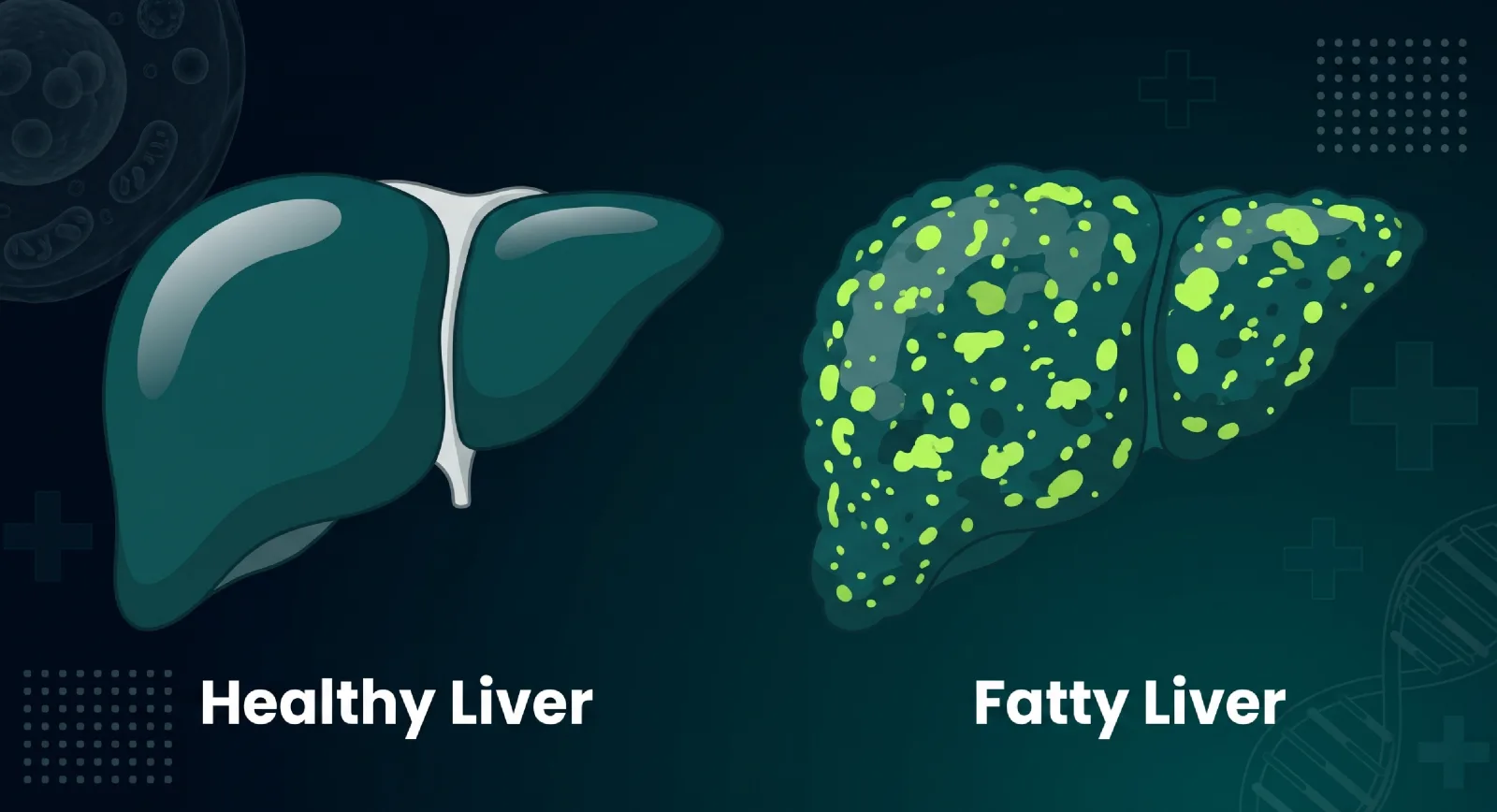
Fatty Liver & Liver Health
Fatty liver disease occurs when excess fat accumulates in the liver. It is commonly associated with metabolic factors such as insulin resistance, obesity, Type 2 diabetes and abnormal blood lipid levels. It can also occur in individuals who do not have excess body weight.
Fatty liver may develop without noticeable symptoms, but in some individuals it can progress to liver inflammation, fibrosis and more serious liver complications.
Our Approach
Our approach focuses on understanding the metabolic, nutritional and lifestyle factors associated with fat accumulation in the liver.
Liver Health Markers
Understand liver enzymes such as ALT and AST, along with relevant investigations and medical history.
Insulin Sensitivity
Consider insulin resistance, blood glucose regulation and their relationship with liver fat accumulation.
Nutritional Patterns
Evaluate food quality, meal composition, added sugar intake and overall dietary habits.
Metabolic Health
Consider body composition, cholesterol, triglycerides and other relevant metabolic markers.
Lifestyle Factors
Understand physical activity, sleep quality, stress and other daily habits influencing liver health.
Our goal is to develop an individualized nutrition and lifestyle approach based on your health status and nutritional needs.
Why It Matters
The liver plays an essential role in metabolism, digestion, nutrient processing and detoxification. Excess fat accumulation can affect normal liver function and may lead to progressive liver damage in some individuals.
Fatty liver is associated with several health concerns, including:
- Insulin resistance and Type 2 diabetes.
- Elevated triglycerides and cholesterol.
- Increased cardiovascular risk.
- Liver inflammation and fibrosis.
- Progression to advanced liver disease in some individuals.
Understanding liver health and addressing associated metabolic factors is important for long-term well-being.
How MHR Supports You
Liver-Focused Nutrition Strategies
Develop practical nutrition plans that support liver health, with attention to food quality, added sugars and overall dietary patterns.
Metabolic Health Support
Address factors associated with liver fat accumulation, including insulin resistance, blood glucose regulation and lipid metabolism.
Nutritional Adequacy
Evaluate nutritional needs and potential deficiencies to support overall metabolic and liver health.
Sustainable Lifestyle Changes
Build consistent routines around physical activity, sleep, nutrition and weight management to support long-term liver health.
How to Get Started
Health Assessment
Share your health history, available liver function reports, ultrasound findings, metabolic markers and lifestyle details.
Personalized Consultation
Discuss your health assessment with Sindhu to understand your nutritional needs and factors influencing your liver and metabolic health.
Begin Your RESET Journey
Receive personalized nutrition and lifestyle guidance with ongoing monitoring, accountability and support based on your chosen program.
Got Questions?
Frequently Asked Questions
Fatty liver can be associated with insulin resistance, excess body weight, Type 2 diabetes, elevated triglycerides and other metabolic factors. It can also occur in people without obesity. Alcohol consumption and certain medications can contribute to other forms of fatty liver disease.
Yes. Fatty liver can occur in individuals with normal body weight. Metabolic health, genetics, dietary patterns and other factors can influence liver fat accumulation.
Yes. Appropriate nutrition, regular physical activity and sustainable weight management where appropriate can help reduce liver fat and support metabolic health.
ALT and AST are enzymes commonly measured through blood tests to assess liver health. Elevated levels may indicate liver cell injury, but normal levels do not always rule out fatty liver or liver damage. Further clinical assessment may be necessary.
Management depends on the underlying cause, severity and individual health status. Nutrition and lifestyle changes are important components of care, but some individuals may require medication or other medical interventions. Decisions should be made with the treating doctor.