
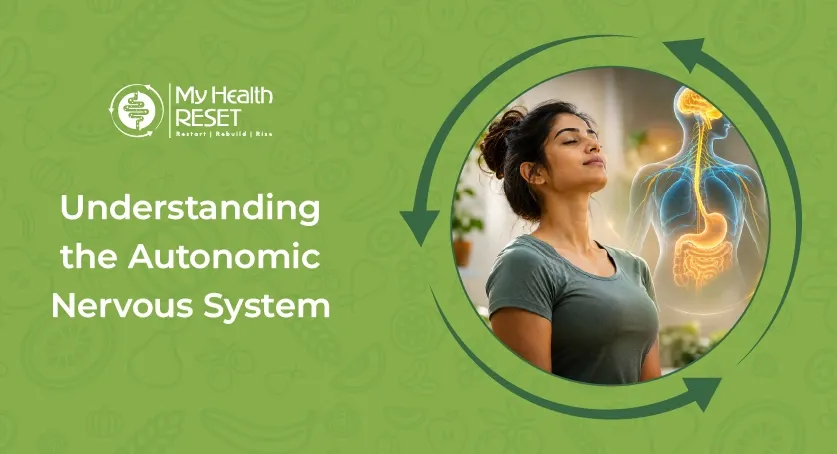
Understanding the Autonomic Nervous System: Its Role in Stress, Digestion and Overall Health
Introduction
Many of us have felt butterflies in the stomach before an exam or an important meeting. Some people get a fast heartbeat when they are tensed, and some get loose motion or acidity when they are anxious. Generally we think these are small things, but one need to understand that this is the brain, nerves and the organs communicating with each other all the time.
All these happen because of the Autonomic Nervous System (ANS). It controls the functions which happen automatically in our body like heartbeat, blood pressure, digestion, breathing and body temperature. The main job of the ANS is to keep the inside of the body balanced, and this balance is called homeostasis. In simple words, the homeostasis meaning is keeping a steady condition inside the body even when the outside conditions change.
When we understand how the ANS works, it becomes easy to understand why stress affects our digestion, sleep and overall health.
What Is the Autonomic Nervous System?
The autonomic nervous system meaning is, it is the part of the peripheral nervous system which controls the involuntary functions of the body. Involuntary means we do not control them consciously, they happen on their own. It keeps communicating with the brain, spinal cord and internal organs, and it adjusts the body according to the changes inside and outside.
Key autonomic nervous system functions are controlling the heart rate and blood pressure, moving the food through the gut, releasing digestive juices, sweating and body temperature, pupil size, bladder control and sexual responses. All these together help to keep the internal balance of the body.
There are three main parts of the autonomic nervous system. They are the sympathetic nervous system, the parasympathetic nervous system and the enteric nervous system. Each one has its own role, but all three work together.
1. Sympathetic Nervous System: Fight or Flight
The sympathetic nervous system is responsible for the fight or flight response. Whenever the body feels a threat, an emergency or any stressful situation, this system becomes active. It increases the heart rate and blood pressure, sends more blood to the muscles, makes us more alert and releases the stored energy. At the same time, digestion is slowed down for some time because the body gives priority to handle the situation.
This is also the time when stress hormones like adrenaline and cortisol are released. For a short time it is useful, because it helps us to react quickly. But the problem starts when this system is switched on again and again for days or weeks due to continuous stress. Then the sleep, digestion and appetite get affected.
2. Parasympathetic Nervous System: Rest and Digest
The parasympathetic nervous system does the opposite work. It helps the body to recover, digest the food and save energy, hence it is called the rest and digest system. Parasympathetic nervous system functions include slowing down the heart rate when it is safe, helping the food to move through the gut, releasing digestive juices, supporting bowel and bladder functions and bringing the body back to a calm state.
Most of this work is done through the vagus nerve, which connects the brain with the heart, lungs and gut. This is the system which helps us to come back to normal after a stressful situation.
So what is the difference between sympathetic and parasympathetic nervous system? The sympathetic system prepares the body for action, and the parasympathetic system helps the body to relax and recover. We can compare it to the accelerator and brake of a vehicle. Both are needed, and neither one is good or bad.
3. Enteric Nervous System: The Gut's Own Nervous Network
Many people do not know that our gut has its own nervous system. The enteric nervous system is a big network of nerve cells present in the walls of the digestive tract. Because it handles most of the digestion on its own, it is also called the second brain in the gut.
Enteric nervous system functions are controlling the movement of the intestines, coordinating the muscle contractions which push the food forward, releasing digestive juices and passing messages within the gut and to the brain. Though it can work independently, it still keeps in touch with the brain and the rest of the ANS.
Understanding the Gut-Brain Connection
The gut and the brain are continuously communicating with each other through nerves, hormones and immune signals. This two way connection is called the gut brain axis.
This is the reason why stress can upset our stomach. When we are emotionally stressed, the movement of food in the gut, the sensitivity of the gut and the bowel habits can change. In the same way, the signals from the gut can affect our appetite and even our mood. Hence, when there is a digestion problem, food is not always the only reason. Stress, poor sleep and nervous system regulation also play an important role.
How Chronic Stress Can Affect Your Health
Stress is a normal response of the body, and short term stress helps us to face challenges. But when the stress continues for a long time, it starts affecting the body. Common chronic stress symptoms and effects of stress on the body are given below.
In digestive health, stress can change the gut movement, gut sensitivity and bowel habits. In sleep, when the body is always on alert mode, it is difficult to get proper sleep, and poor sleep again increases the stress, so it becomes a cycle. Appetite also changes, some people feel more hungry and some lose their appetite, and most of them go for comfort foods. In metabolic health, cortisol and other stress hormones affect the blood sugar levels, and over a period of time this may lead to weight gain. Emotionally also, long term stress affects the mood, concentration and the ability to relax.
However, stress is not the only cause for gut or metabolic problems. If the symptoms continue, it is better to get a proper medical check up.
Supporting Autonomic Regulation Through the Five Pillars of My Health RESET
The ANS responds to our daily lifestyle. Hence small and consistent habits can make a big difference in nervous system regulation. At My Health RESET, we follow The Five Pillars.
Food: Eat balanced meals with adequate protein, fibre and nutrients. Include more vegetables and reduce processed foods. Try to eat at regular timings which suit your body. Do not avoid foods based on assumptions, get the food intolerances checked properly.
Hydration: Drink enough water throughout the day, and increase it when you are physically active or during hot weather. If your doctor has given any fluid restriction, follow that.
Sleep: Go to bed and wake up at the same time every day. Keep the bedroom dark and comfortable, and avoid mobile phone at least some time before sleep. If sleep problems keep coming back, do not ignore them.
Breathing: Breathing needs special attention because the way we breathe directly affects the ANS. Slow breathing is one of the easiest ways to activate parasympathetic nervous system. Breathing exercises for stress like slow and comfortable breathing, belly (diaphragmatic) breathing and few minutes of mindful breathing can be practised daily. It should always be comfortable, without forced breath holding or over breathing.
Physical Activity: Walk regularly, add some strength training and do not sit for long hours continuously. Choose activities which you enjoy so that you can follow them every day. Regular movement is good for the heart, metabolism and overall health.
Frequently Asked Questions
Common Questions & Answers
It is the part of the nervous system which works automatically. Heartbeat, digestion, sweating and breathing rate are controlled by it without us thinking about them.
The sympathetic nervous system prepares the body for action, which is the fight or flight response. The parasympathetic nervous system helps the body to rest, digest and recover.
There are three parts. They are the sympathetic nervous system, the parasympathetic nervous system and the enteric nervous system, which controls most of the digestion.
It is the two way communication between the gut and the brain through nerves, hormones and immune signals. This is the reason why stress can affect our stomach.
Slow breathing, regular sleep timing, daily walking and taking small breaks during busy days can help. If the stress or symptoms do not reduce, it is better to consult a healthcare professional.
Conclusion
The autonomic nervous system plays an important role in keeping the body balanced every moment. Its connection with the gut, brain, stress and metabolism shows that every part of the body is connected. At My Health RESET, we look at the whole person and not only the symptom. By working on Food, Hydration, Sleep, Breathing and Physical Activity step by step, we can build habits that support long term health.
Beyond Symptoms. Understanding the Whole You.